

Government leaders say there’s no evidence that a recent spate of outages are part of a coordinated cyber campaign and that most are due to routine upgrades, but software experts argue they highlight the vulnerable and opaque state of technology infrastructure that underpins all modern life.
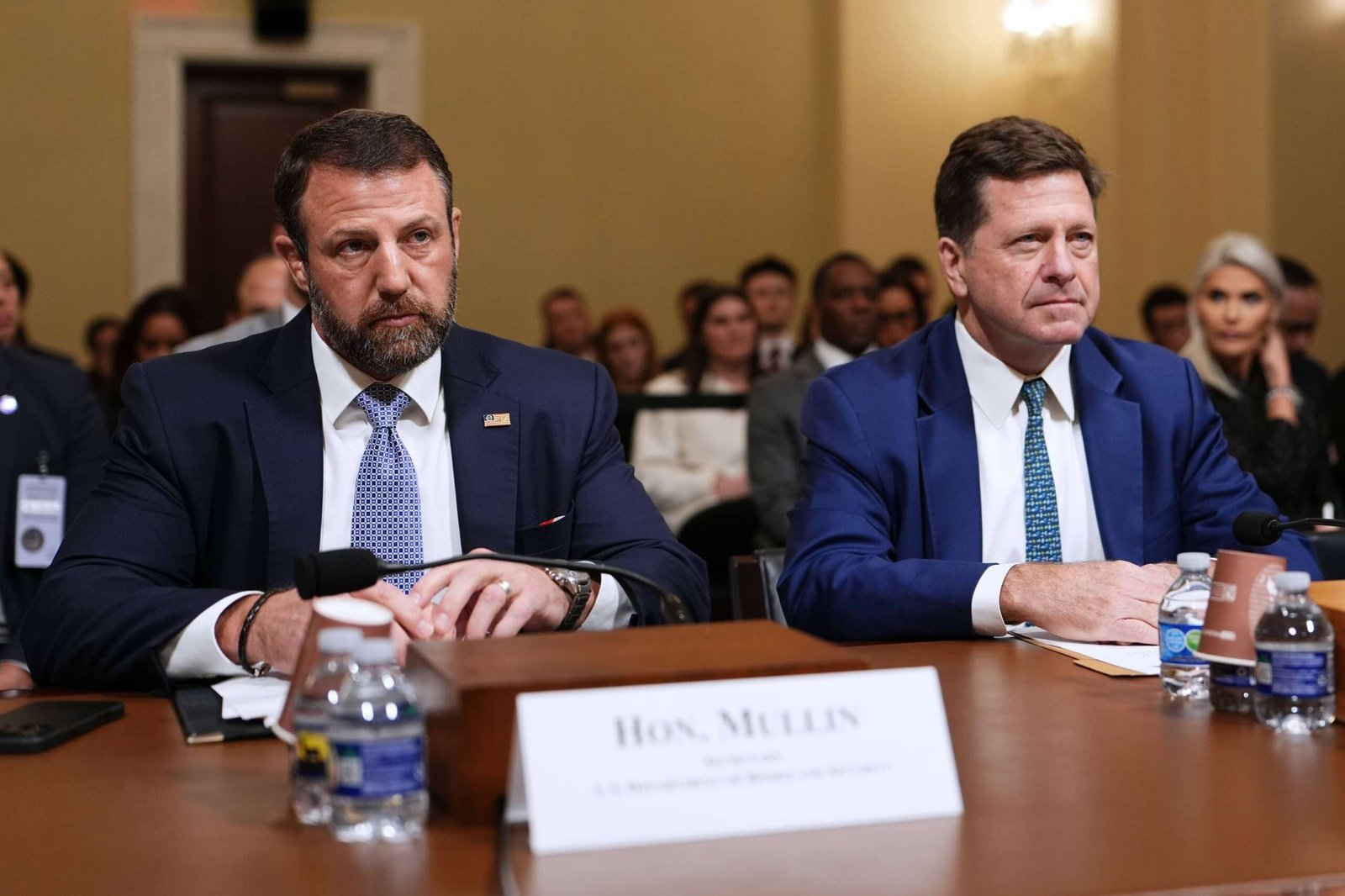
During a House Homeland Security Committee hearing Wednesday, Director of National Intelligence Jay Clayton described the outages as “several unrelated issues that have recently caused service disruptions.”
“I understand the timing of these incidents can raise questions, and it should,” Clayton said. “The American people should ask us these questions. But based on what we know today, after a great deal of diligence, these are separate service outages associated with maintenance and technical changes. They are not a coordinated or state sponsored attack.”
The string of incidents included a nearly daylong Microsoft 365 outage caused by a hidden defect in the company’s cloud gateway; Saturday’s nationwide Federal Aviation Administration ground-stop caused by a telecommunications network failure linked to a router upgrade; and “routine maintenance” taking down a classified communications network at the National Security Agency.
Homeland Security Secretary Markwayne Mullin also echoed Clayton’s remarks, saying he’s “’98% confident that this has nothing to do with our adversaries hacking or going after our systems.”
Mullin said Department of Homeland Security officials are convening a call with industry to discuss the outages and how to avoid them in the future.
“It’d be helpful, as we’re moving forward, that maybe the industry that’s doing the upgrade could inform their customers that it’s going to take place,” Mullin said, adding that patching and aging infrastructure are part of the challenge.
“We’re not pressuring the industry to do it,” he added. “We just want to have a conversation, say, maybe we should start communicating, because what happens online is a tremendous amount of fear.”
Some of the outages have also been linked to efforts to rapidly patch software in response to artificial-intelligence driven vulnerabilities.
“Anytime you are going to do those things, you take systems down, you bring them back up,” Clayton said. “We are in an environment where the rate of patching, the rate of upgrading of systems is increasing.”
While the cause of the outages has garnered widespread attention, former government officials say the incidents should bring more attention to longstanding gaps in software reliability and safety.
Anjana Rajan, CEO of cybersecurity firm Atalanta and former White House cyber official, said Mullin’s call with industry comes at a crucial time, as the private sector owns and operates most U.S. critical infrastructure.
“As our critical infrastructure is becoming more and more software defined, our ability to understand what those systems will do under normal, abnormal, or hostile conditions is not keeping pace,” Rajan told Federal News Network. “And I think you know the American people, regardless of what the root cause is, like the catastrophic impact is the same. They’re stuck on the tarmac. Their credit card’s not working. Their email is out.”
Lauren Zabierek, CEO and co-founder of the Software Safety Institute, said while people are concerned about potential cyber attacks, the outages prove that “software doesn’t have to be hacked to cause harm.” Zabierek is a former Cybersecurity and Infrastructure Security Agency official.
“We think of security and quality as properties of the product, but safety is about the outcome for the people who depend on it every day,” she told Federal News Network. “Our national security, our economy, and our public health and safety all depend on software, and too much of it is built with unsafe components and practices and shipped with unsafe defaults.”
Zabierek and former CISA colleague Bob Lord recently co-founded the Software Safety Institute to tackle the challenge of technology vendors shipping products with known defects and vulnerabilities. The institute’s work builds on CISA’s “Secure by Design” initiative.
Lord, who serves as the institute’s chief strategy officer, said the online panic surrounding the outages also point to a lack of safety and security data about software, which he said contrasts with other critical sectors. Without enough information, Lord said, people “connect the dots” on their own.
“We don’t have enough information in the software sector as a whole, and we don’t have the institutions in place to give us the right dots, so we tell the right story,” he told Federal News Network. “We don’t have transparency.”
Zabierek said that beyond convening a conversation with industry, Mullin could use his perch at DHS to reconstitute the Cybersecurity and Infrastructure Security Agency’s Cybersecurity Advisory Committee and the DHS Cyber Safety Review Board. The latter investigated major cyber incidents before it was disbanded last year. Lawmakers on the homeland security committee introduced a bipartisan bill Tuesday that would reconstitute the board under a new name.
“And [Mullin] could tell Congress that CISA needs the authority to set standards for technology manufacturers and hold them accountable,” Zabierek added.
Rajan pointed to a January 2025 report co-authored by CISA and other agencies on “closing the software understanding gap.” The report calls on the U.S. government to take steps to close a gap in how technical investments in new software products have outstripped investments in efforts that verify their functionality, safety, and security.
“If I were the secretary, I’d be really focusing on how are we getting these critical infrastructure providers to build software understanding capabilities, not just cybersecurity capabilities,” Rajan said.
Meanwhile, Lord suggested DHS also take steps to strengthen the Common Vulnerabilities and Exposures (CVE) program, which catalogs publicly disclosed cyber vulnerabilities using standard identifiers. Participation in the CVE program is voluntary.
“There’s no other sector that I’m aware of where a commercial company making, selling products in the United States can simply choose to not report important safety information to their customers and the public,” Lord said.
He and Zabierek also argued that even though AI is accelerating how quickly software flaws are found, officials shouldn’t just focus on faster patching. Lord said a key problem is that companies continue to sell products that contain years and even decades-old programming dangers, such as memory safety vulnerabilities.
“The question shouldn’t be, how do we get defenders to patch harder?” Lord said. “The question should be, how do we reduce these recurring classes of coding error?”
Copyright
© 2026 Federal News Network. All rights reserved. This website is not intended for users located within the European Economic Area.
